Starting an aroma diffuser business in 2027 will require more than selecting a machine, adding a logo, and listing it online. Customers expect connected products that are simple to control and properly supported.
That is why the best time to plan a 2027 launch is in 2026.
Use 2026 to select hardware, validate connectivity, define the mobile experience, prepare refill operations, complete app testing, and build the ecommerce journey. Starting early lets you enter 2027 with a branded ecosystem instead of a private-label device dependent on a generic manufacturer app.
This guide explains how Northstar Innovations helps fragrance companies turn compatible OEM hardware into a connected product line.
1. Decide what kind of aroma diffuser business you are building
Before comparing devices, decide how the business will make money. The diffuser may be a one-time sale, but fragrance oil can create a continuing customer relationship.
Your model may focus on:
- Home fragrance and direct-to-consumer sales
- Commercial scenting for hotels, restaurants, offices, retail stores, gyms, and clinics
- Device rental with a monthly oil plan
- Hardware sales supported by refill subscriptions
- White-label solutions for hospitality groups or distributors
This choice affects device capacity, connectivity, scheduling, refill frequency, support, and ecommerce design. A compact Bluetooth diffuser may suit a bedroom, while a hotel may require a high-capacity Wi-Fi model managed across several locations. Select hardware against the experience customers need after installation, not only appearance or unit price.
2. Choose hardware with the software experience in mind
Many businesses source hardware first and treat the app as a later addition. That creates risk because similar-looking devices may use different commands, Wi-Fi methods, clouds, or firmware.
Before confirming a supplier, ask for:
- Exact model and firmware version
- Connectivity specifications and supported commands
- Bluetooth service, write, and notification details
- Protocol documents and manufacturer technical contact
- Oil-level sensor details, if available
- App SDK, cloud API, or Tuya project information
- Confirmation that production firmware will remain consistent
- Compliance documents for your target markets
Manufacturer cooperation is critical. A sample may not reveal every command, error state, or firmware difference. The brand, manufacturer, and app team must be able to resolve technical questions together.
3. Work with a partner that understands multiple manufacturers
A fragrance company should not be forced to select every future device from one factory simply because its first app was built around one protocol.
Northstar’s current integration work includes aroma diffuser devices and technical collaboration involving CNUS Tech, SCENTA, and Shenzhen Dazhi Technology. We also work with devices built within the Tuya ecosystem, including projects where Tuya’s mobile technology is the right foundation for a branded experience.
Their home, tower, wall-mounted, HVAC, and commercial devices may communicate differently. Our approach therefore uses a device inventory and capability map rather than assuming one command works everywhere.
Each model is recorded with its firmware, connection type, commands, controls, and limitations. The app then shows only relevant controls. A model with lighting displays a light control, while a device without it does not show an unusable button.
4. How our device onboarding process works
The process begins when you share the device manufacturer, model number, firmware version, connectivity type, and required features.
We first check whether the exact device is already in our inventory. Northstar currently has more than 50 aroma diffuser devices for development and testing. If the same model and firmware are validated, we may avoid new protocol discovery and move to compatibility confirmation, branding, and project testing.
If it is not in our inventory, we need a production sample at our Ahmedabad or Bengaluru office. We test pairing, commands, responses, schedules, disconnections, and feature availability before adding the validated model to the platform.
The process normally follows these stages:
- Device identification: Confirm supplier, model, firmware, region, and connectivity.
- Inventory check: Match it with an already supported model and firmware.
- Physical testing: Receive and test a sample when the model is new or materially different.
- Capability mapping: Record commands, responses, features, and limitations.
- App configuration: Apply your brand, device names, controls, and journeys.
- Quality assurance and launch: Test iOS and Android, then prepare stores, analytics, and support.
This inventory-led method reduces repeated work while protecting quality when a supplier changes a circuit board or firmware release.
5. Build your own branded mobile application
The end goal is simple: your customers should experience your brand, not the factory behind the device.
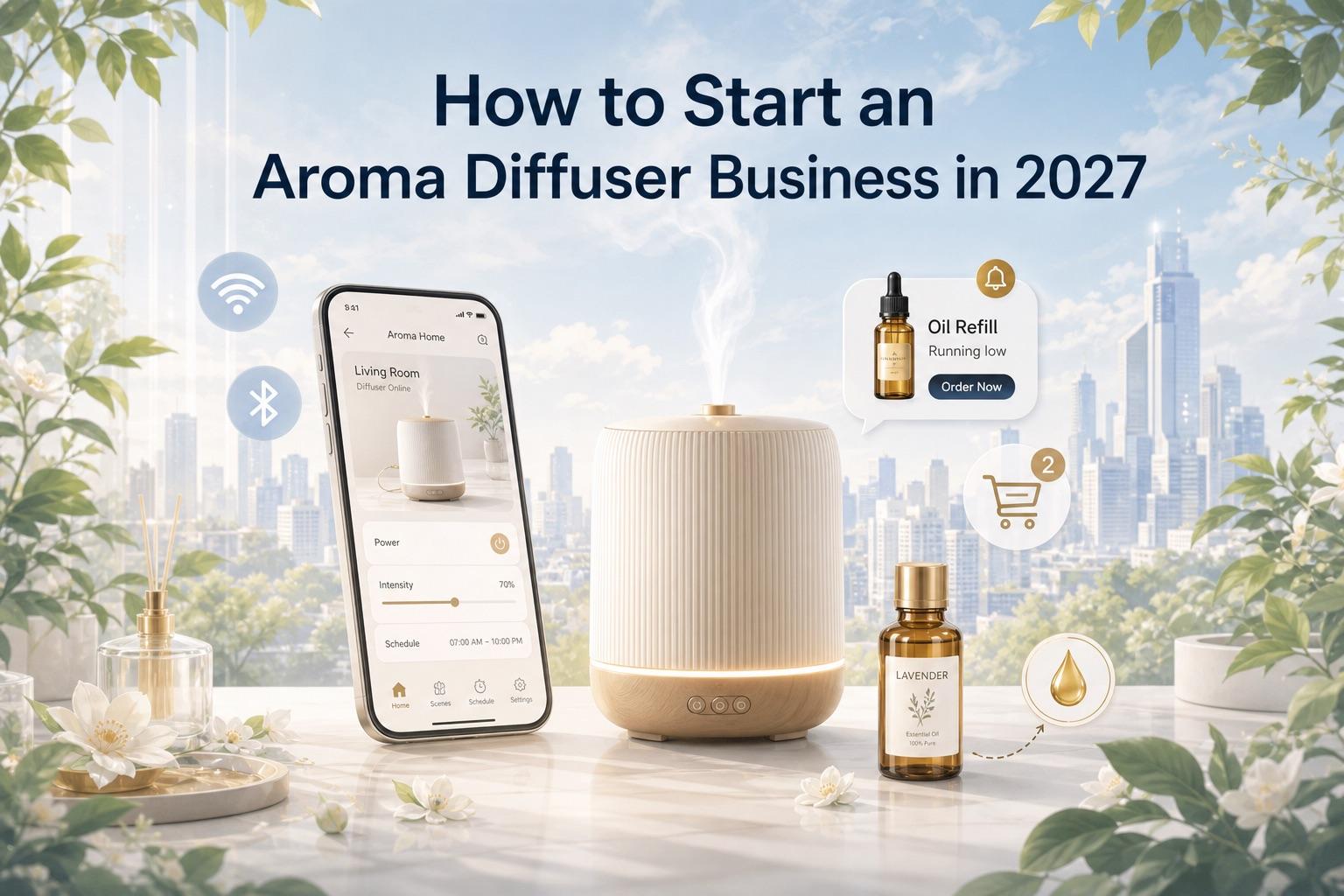
A custom iOS and Android app can let customers pair diffusers, control power and intensity, set run and pause cycles, create schedules, use the fan or light where supported, and manage multiple devices.
Behind the interface, a registry tracks manufacturers, models, firmware, and capabilities. You can add home, tower, and commercial machines without rebuilding the whole app for every launch.
The app can also include onboarding, room assignment, troubleshooting, notifications, usage history, support, and fragrance shopping. Customers receive one consistent experience across suppliers.
6. Turn oil consumption into a timely refill opportunity
Hardware starts the relationship. Fragrance oil creates recurring potential when the business knows when a refill may be needed.
With a supported oil-level sensor, the app can receive the reported level and alert the customer. Without a sensor, it can estimate consumption from spray duration, pause duration, intensity, schedules, and the last recorded fill level. Estimates must never be presented as live sensor data.
At a chosen threshold, the business can send a push notification with a refill action. The same signal can support email, SMS, or service outreach with customer consent.
Examples include:
- “Your lobby diffuser may need a refill soon.”
- “Reorder your usual fragrance before your current bottle runs out.”
This makes communication timely, supports retention, and reduces periods when commercial devices sit empty.
7. Connect device control with ecommerce
A connected diffuser business should not make customers leave the app, search for the correct oil, and guess which bottle fits their machine.
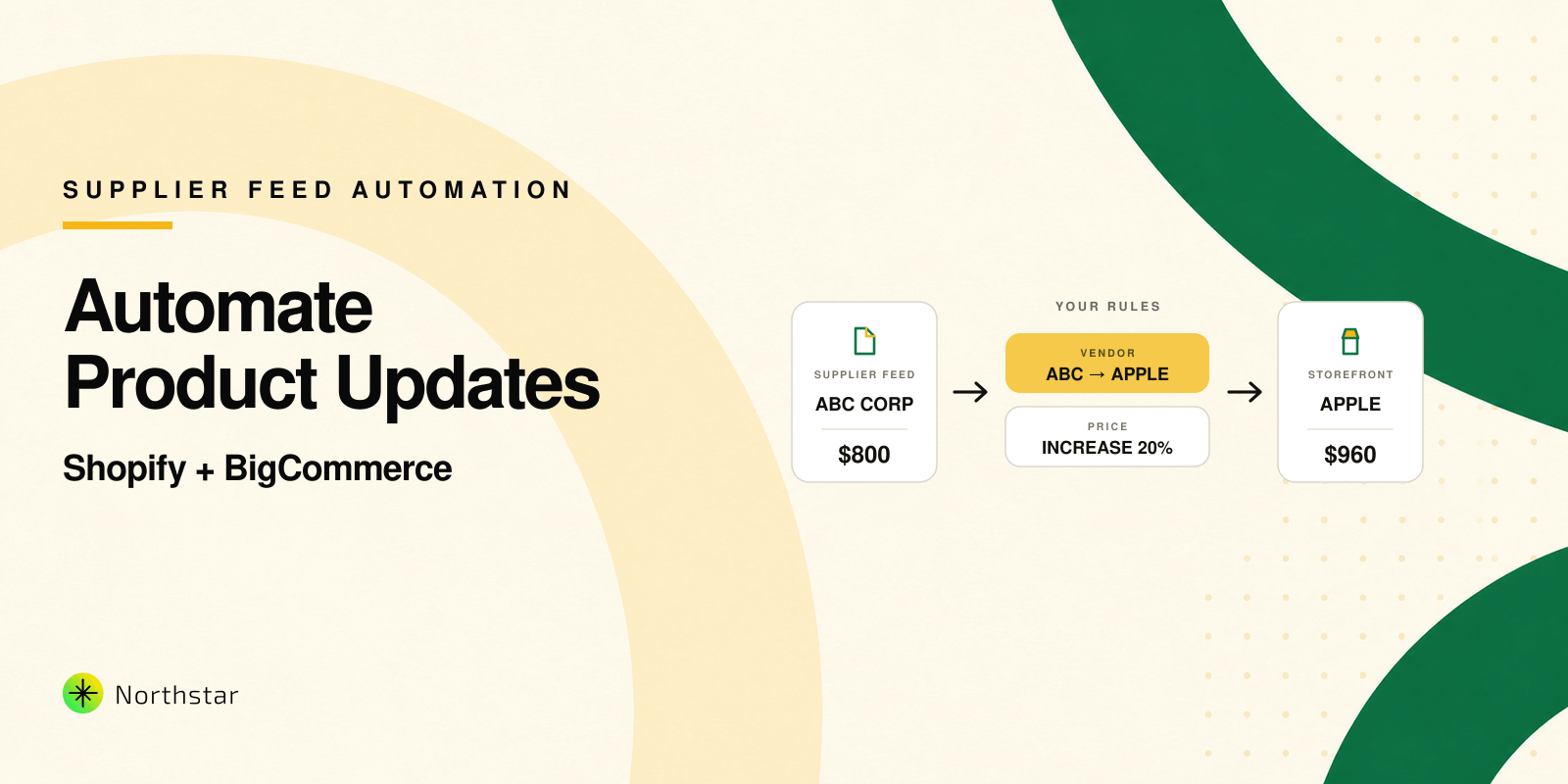
Northstar can connect the app with an ecommerce store so customers can browse compatible oils, select sizes, add to cart, and continue to checkout. This can use Shopify, BigCommerce, or suitable custom commerce architecture.
Compatibility data can recommend oils or accessories for a registered device. Support teams can also identify the model and firmware before responding to an issue.
Brands can also review our Shopify perfume theme, BigCommerce perfume theme, and perfume website design guide for ideas on storytelling, discovery, and conversion.
8. Decisions to make before selecting Northstar as your partner
To receive an accurate scope, prepare answers to the following questions:
- Which countries will you launch in first?
- Are your customers residential, commercial, or both?
- Which exact diffuser models and firmware versions will you sell?
- Do they use Bluetooth, Wi-Fi, Tuya, another cloud, or a combination?
- Which controls must be available in the first release?
- Does the hardware provide real oil-level telemetry?
- Will customers manage one device, multiple devices, or multiple locations?
- Do you need Shopify, BigCommerce, subscriptions, loyalty, or another commerce connection?
- Which channels will handle refill reminders and support?
- Who owns app-store accounts, customer data, and support?
- What are the launch volume, timeline, and device roadmap?
Also confirm that the supplier will provide protocol documentation and technical assistance. If that is not available, allow additional time for device investigation and validation.
9. How our charges are structured
Our commercial model begins with a one-time upfront cost for the branded mobile application, including the agreed foundation, branding, journeys, controls, and launch scope.
Additional charges depend on new devices requiring configuration and testing. A validated inventory model may need much less work than a new device with undocumented commands or different firmware.
Ecommerce is scoped separately. A link to an existing product page is different from an in-app catalog, subscriptions, accounts, checkout integration, analytics, and refill campaigns.
This structure supports a focused launch and later expansion. The proposal should identify app setup, included devices, new-device fees, commerce features, maintenance, and third-party costs.
10. Use 2026 to prepare for a confident 2027 launch
A practical timeline begins with supplier decisions in 2026. Validate devices before mass production, then progress app design, development, commerce integration, and operations using confirmed hardware.
Before launch, run a controlled pilot. Test pairing, schedules, notifications, oil estimates, refill purchases, support, and recovery after lost connectivity. Early feedback is less expensive than fixing problems after thousands of units ship.
For brands selling in the United States, India, the United Kingdom, Canada, or Australia, the product experience should also account for local app-store requirements, privacy disclosures, ecommerce taxes, payments, shipping, electrical certification, and customer communication rules. These requirements should be reviewed with the appropriate legal, tax, and compliance specialists for each market.
Build a fragrance business, not just a device catalog
The strongest aroma diffuser opportunity for 2027 is not simply importing another machine. It is building a recognizable brand around reliable hardware, an intuitive mobile application, useful refill communication, and a connected purchasing experience.
Northstar Innovations helps companies bring those parts together. We support multi-manufacturer device integration, branded iOS and Android applications, Bluetooth and Wi-Fi control, Tuya-based implementations where appropriate, oil-level experiences, customer notifications, device management, and ecommerce connections.
If you are selecting devices now for a 2027 launch, contact Northstar Innovations with the manufacturer name, model number, firmware version, connectivity type, required controls, target countries, and ecommerce platform. We will check our existing inventory, identify what needs to be tested, and define a practical path from physical diffuser to a complete branded customer experience.