Every six months, Shopify drops an Editions release packed with hundreds of updates, flashy keynote videos, and plenty of buzzwords. Their Fall ’26 release, dubbed “Exponential,” is no exception.
At Northstar, our team spent the last week stress-testing the developer previews, reviewing the technical documentation, and analyzing what these changes actually mean for high-growth brands and enterprise merchants.
Cut through the marketing noise, and this edition signals two massive shifts in eCommerce:
- The transition from human-browsed storefronts to Agentic Commerce (where autonomous AI agents research, recommend, and execute checkouts on behalf of shoppers).
- Shopify’s aggressive use of its collective merchant network (100M+ Shop Pay profiles) to give independent brands an unfair advantage against Amazon and rising ad costs.
Whether you run a fast-scaling DTC brand or manage an enterprise catalog, here is our comprehensive, chapter-by-chapter breakdown of all 11 core segments—complete with fast, actionable pointers and the Northstar Take on each.
Editorial Note: Northstar builds catalog management, merchandising, and automation tools for high-growth Shopify and BigCommerce merchants. In an era where AI agents and consumers both demand clean, real-time product data, catalog hygiene is no longer optional—it is your primary growth engine.
1. Agentic Commerce & AI Discovery
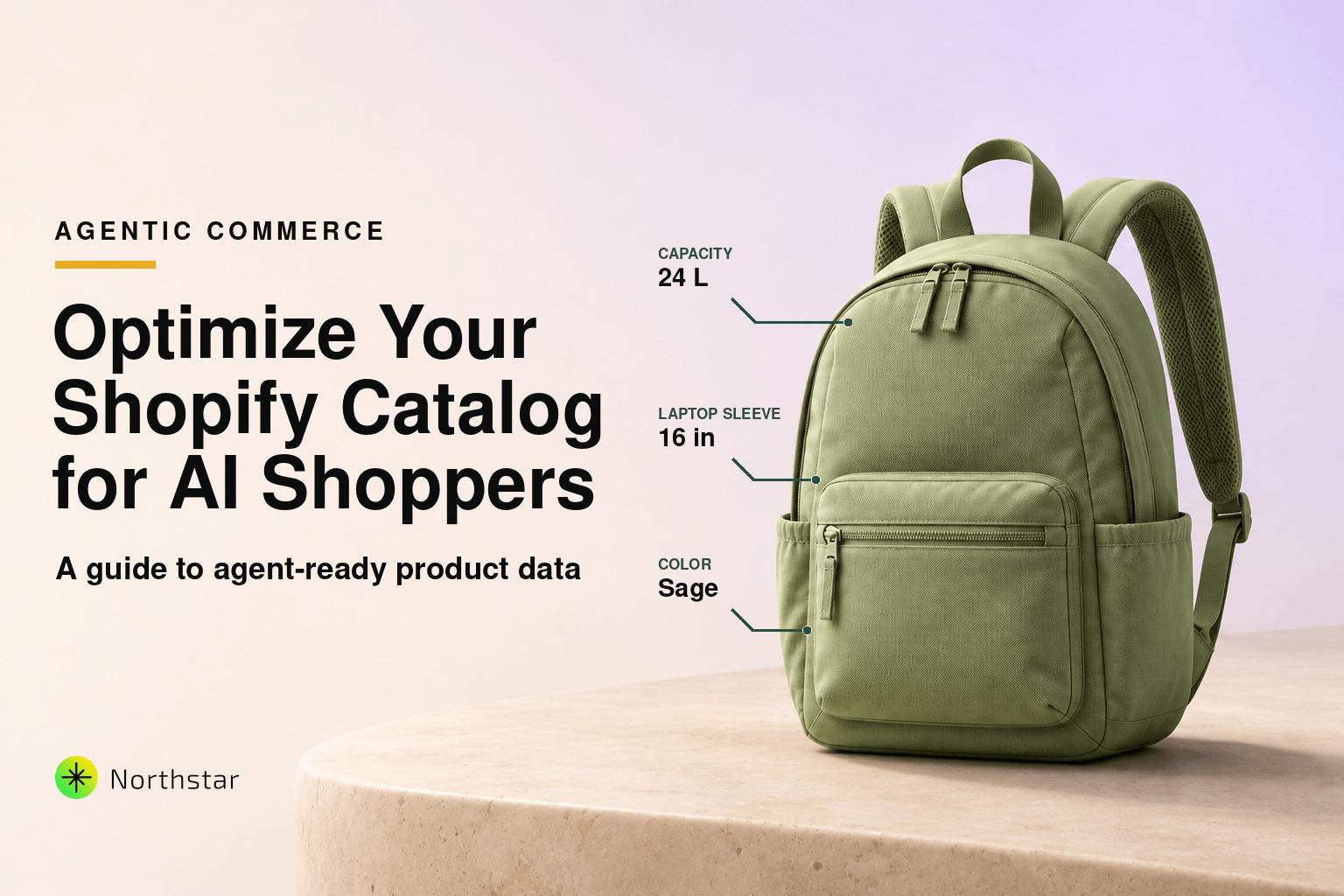
Shoppers are no longer exclusively browsing Google or clicking paid social ads. Consumers increasingly ask ChatGPT, Claude, Gemini, or Meta AI to find specific products, compare options, and complete purchases. Fall ’26 introduces native infrastructure so third-party AI agents can interact with your store directly.
- Standardized
shop.mdMetadata File: A machine-readable Markdown configuration hosted at your domain's root. It acts like an LLM-specificrobots.txt, giving AI crawlers real-time, verified context on brand ethos, shipping windows, return policies, and active promotions. - Direct Agent Checkout via Shop Pay: Third-party AI agents can now construct carts and execute authenticated, one-click Shop Pay checkouts directly within conversation interfaces without forcing a user to manually navigate a landing page.
- Sub-Second Inventory Handshakes: External AI models can query real-time stock availability and regional delivery estimates so bots never recommend out-of-stock SKUs.
- Semantic Natural Language Search: Upgraded storefront search that understands nuanced shopper prompts (e.g., "Show me an oversized merino wool sweater that won't itch and ships before Friday").
- Anti-Scraper Guardrails: Built-in rate-limiting and pricing floor safeguards that distinguish between authorized purchasing agents and unauthorized web scrapers.
- Agent Engine Optimization (AEO) Analytics: A new admin dashboard showing how often your catalog is cited, recommended, and converted inside leading conversational AI platforms.
- Multimodal Visual Search: Shoppers can upload photos or screenshots directly into your store's search bar to discover visually similar products in your catalog.
Northstar Take: Don't wait for your competitors to figure this out. Setting up your
shop.mdfile is a low-effort, high-impact task you should finish this week. If an autonomous agent can’t read your shipping policies, stock levels, and exact product dimensions in a structured format, it simply will not recommend your brand to shoppers asking high-intent buying questions.
2. Sidekick 2.0 & Autonomous Store Operations
Sidekick is no longer limited to answering basic questions about your analytics. It now functions as an agentic copilot capable of multi-step task chaining across your entire store backend.
- Multi-Step Execution: Sidekick can handle chained commands like: "Identify products with declining conversion rates over the last 60 days, draft updated SEO titles, tag them for a promotional bundle, and schedule an announcement banner."
- Synthetic Shopper Stress-Testing: Before pushing a major redesign or checkout change live, Sidekick can simulate thousands of synthetic shopper sessions to uncover broken links, friction points, or unexpected cart drop-offs.
- Prompt-to-Code Liquid Generation: Merchants and non-technical staff can describe desired visual tweaks in plain English, and Sidekick generates standards-compliant Liquid, HTML, and CSS diffs for review.
- Proactive Store Health Auditing: Sidekick operates in the background, proactively alerting you if third-party app scripts cause checkout latency spikes or if refund rates on a specific SKU jump abnormally.
- Automated Catalog Cleansing: Ingest messy supplier spec sheets or image folders, and have Sidekick standardize product titles, generate image alt text, and populate metafield attributes automatically.
- Context-Aware Recommendations: Sidekick leverages your store's specific historical data, active apps, and custom metafields rather than offering generic eCommerce advice.
Northstar Take: Sidekick 2.0 won’t replace an experienced eCommerce director or technical partner, but it fundamentally eliminates administrative drudgery. We recommend our clients use Sidekick’s synthetic shopper simulation before running seasonal promotional drops—it’s an easy way to catch checkout bugs and third-party script conflicts before your real customers do.
3. Online Storefronts & The New Canvas Surface
Storefront performance directly impacts conversion rates. Fall ’26 tackles page bloat with early access to Canvas, a visual layout tool designed to provide drag-and-drop freedom without sacrificing site speed.
- Early Access to "Canvas": A native visual editor offering free-form, pixel-perfect design control with nested grids and responsive breakpoints, accessible right from your theme editor.
- Zero JavaScript Bloat: Unlike third-party page builder apps that inject megabytes of tracking scripts and custom libraries, Canvas compiles directly into clean, native Liquid and CSS.
- Sub-Second Global Edge Delivery: Theme assets and rendered HTML are pushed deeper to international edge points of presence (PoPs), shaving 200–400ms off Time-to-First-Byte (TTFB) in global markets.
- Built-in Flash-Sale Bot Filtering: Automatic traffic smoothing detects bot surges during hyped product drops, prioritizing bandwidth and checkout slots for verified human buyers.
- Hardware-Accelerated Micro-Interactions: Modern themes include smooth, native drawer carts, sticky add-to-cart bars, and animated image reveals that run smoothly on mobile devices without external libraries.
- Dynamic Viewport Loading: Assets and rich imagery automatically scale and serve based on the user's real-time connection speed.
Northstar Take: If your store is currently weighed down by multiple third-party visual page builders, your mobile PageSpeed score is likely suffering. While Canvas is still rolling out in early access, we advise clients to start planning a gradual migration away from clunky builder plugins toward native Shopify theme sections and Canvas blocks. The performance and conversion gains are substantial.
4. Merchandising & Catalog Architecture (2,000 Variants)
For over a decade, the 100-variant limit forced growing brands to use complex workarounds, sibling products, or expensive custom PIM setups. Fall ’26 completely rewires the core catalog architecture.
- Native 2,000 Variants per Product: High-SKU categories like fashion, apparel, and configurable home goods can now list complex color, size, material, and packaging variations under a single product record.
- Rich Media Filtering via Catalog API: Frontends and search apps can query products based on specific media types, including 3D models (USDZ/GLTF), embedded videos, and specification PDFs.
- Multi-Barcode Support per SKU: Track multiple standard barcodes (UPC, EAN, GTIN, and internal vendor codes) against a single inventory record, simplifying multi-region distribution and retail scanning.
- Hierarchical Combined Listings: Group distinct product listings under parent-child relationships so each colorway retains its own unique URL, reviews, and SEO metadata while sharing an intuitive swatch selector.
- Native Component Bundling: Sell multi-packs, kits, and curated bundles with component inventory deducted in real time, preventing accidental overselling.
- Granular Metafield Validation: Built-in validation rules for custom product attributes prevent merchandising teams from accidentally publishing invalid technical specifications or sizing inputs.
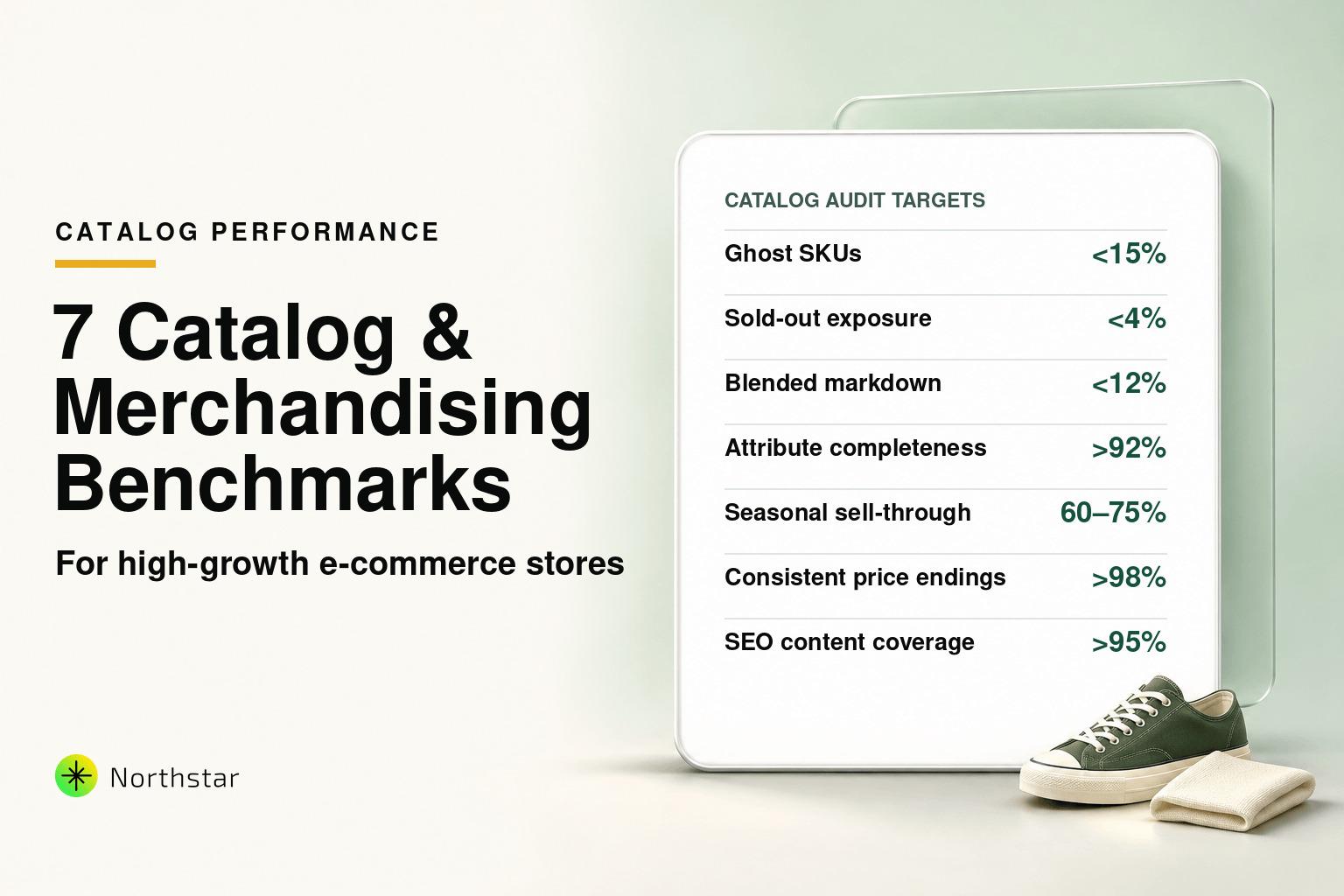
Northstar Take: The 2,000-variant increase is the headline feature here, but proceed thoughtfully. Before you merge complex products into massive variant matrices, verify that your 3PL software, ERP, and email marketing feeds are fully updated to support Shopify's newest Catalog API endpoints. At Northstar, we’re actively helping clients audit their middleware to ensure seamless variant migrations.
5. Retail & Omnichannel POS
Shopify POS continues to close the distance between online stores and brick-and-mortar locations by tapping into the broader Shopify consumer identity network.
- Network In-Store Customer Recognition: When a walk-in shopper taps their physical credit card at your retail POS terminal, the terminal instantly reconciles their card token against their global Shop Pay profile (with customer consent), surfacing their digital order history and preferences.
- Next-Level Clienteling: Store associates can view online wishlists, past customer support tickets, preferred sizing, and available loyalty points directly on their POS iPads.
- Endless Aisle Auto-Routing: If an item is out of stock in the retail store, associates can process the payment on the spot and route fulfillment to your central warehouse for home delivery.
- Receiptless Omnichannel Returns: Customers can walk into a physical store and return an online order without hunting down order confirmation emails—staff can look up the transaction via phone number or card tap.
- Curbside Pickup (BOPIS 2.0): Real-time proximity alerts inform retail staff when a click-and-collect customer is nearby, keeping wait times under two minutes.
- Custom POS UI Extensions: Developers can inject custom operational tiles, custom discounts, and warranty up-sells directly into the retail checkout workflow.
Northstar Take: The ability to identify an online shopper the moment their card hits an in-store POS terminal is a game changer for DTC brands with physical outposts. It turns your retail team from simple cashiers into consultative client advisors. Make sure your retail staff is trained to leverage customer profile data to suggest complementary items and increase Average Order Value (AOV).
6. Payments, Global Gateways & Shopify Protect
Payment processing is no longer just about accepting credit cards; it’s about stopping friendly fraud and delivering frictionless payment methods across every international territory.
- Shopify Protect Rule Builder: A flexible rule engine that allows you to automate fraud defenses (e.g., automatically flagging or holding fulfillment on orders where the shipping address is a known freight forwarder or order value exceeds $1,000 with overnight shipping).
- Guaranteed Fraud Coverage: When an order is verified and processed through Shopify Protect, Shopify covers the financial cost of fraudulent chargebacks and dispute processing fees if a breach occurs.
- Seven New Local Payment Methods: Shopify Payments adds native support for major regional payment methods, including Alipay, WeChat Pay, GrabPay, and OXXO, eliminating third-party checkout redirects in APAC and LATAM.
- Biometric Shop Pay: Facial and fingerprint recognition directly within mobile browsers speeds up one-click checkout times by an additional 10–15%.
- Multi-Currency Payout Flexibility: Merchants selling across borders can hold, reconcile, and receive bank payouts in multiple foreign currencies, avoiding forced foreign exchange conversion fees.
Northstar Take: If you sell internationally or carry high-ticket items, configure the Shopify Protect Rule Builder immediately. Rising chargebacks and dispute fees represent a silent margin drain for growing brands. Tapping into Shopify's cross-merchant fraud signals gives you enterprise-grade protection without requiring expensive third-party fraud tools.
7. Operations, Risk & Workflow Automation
As eCommerce operations scale, manual order auditing and disjointed third-party automations create technical debt. Fall ’26 brings enterprise-grade orchestration tools directly into Shopify Admin.
- Enhanced Shopify Flow Logic: Flow now supports complex conditional branching, loops over individual order line items, and native delays, reducing reliance on third-party integration platforms like Zapier.
- Automated Risk Triage: Flow can automatically quarantine suspicious orders, delay warehouse fulfillment release, and send instant alerts to your Slack or Microsoft Teams channels with one-click actions.
- Granular Role-Based Access Controls (RBAC): Restrict backend permissions so specific staff or agencies can only view designated inventory locations, customer segments, or marketing channels, while masking sensitive customer contact details and financial exports.
- Immutable Admin Audit Logs: Complete visibility into every administrative action—track exactly who adjusted inventory levels, modified theme code, changed discount rules, or exported customer lists.
- Automated Stock Transfers: Transfer recommendations based on regional sales velocity so you don't overstock your West Coast 3PL while running dry on the East Coast.
Northstar Take: Many scaling brands carry unnecessary operational overhead by stitching together fragile external automation tools. With Flow’s new loop and delay features, we recommend reviewing your external automations and migrating them into native Shopify Flow workflows to save on SaaS fees and reduce API sync delays.
8. The Shop App Ecosystem & Network Effects
The Shop App has moved beyond simple parcel tracking to become a high-converting, decentralized shopping destination powered by first-party consumer data.
- Syndicated Network Identity: When a consumer creates or updates a Shop account on any merchant’s store, their saved shipping addresses, payment details, and preferences sync seamlessly across every store in the network.
- Shop Minis 2.0: Brands can deploy lightweight, interactive micro-experiences directly within the Shop App—such as custom sizing quizzes, shade finders, or shoppable UGC feeds.
- Shop Cash Multiplier Campaigns: Brands can fund high-converting promotional campaigns that multiply consumer Shop Cash balances (e.g., "Spend your $10 Shop Cash for $30 off our collection"), driving customer acquisition with predictable unit economics.
- Algorithmic In-App Recommendations: Organic discovery algorithms surface your products to users based on cross-merchant browsing history and purchasing patterns.
- Syndicated Verified Reviews: Reviews collected on your primary storefront automatically sync to your Shop App profile, building instant social proof for in-app shoppers.
Northstar Take: Treat your Shop App profile as your secondary digital flagship, not an afterthought. Running targeted Shop Cash promotions is currently one of the most cost-effective ways to acquire high-LTV customers who already have pre-loaded payment credentials ready to convert with a single tap.
9. Marketing & Shop Campaigns
Rising customer acquisition costs (CAC) on paid social channels make accurate attribution more vital than ever. Fall ’26 equips marketers with automated campaign tools driven by first-party identity matching.
- Campaign Autopilot: An automated advertising engine that dynamically balances ad spend across the Shop App, Meta, Google, and emerging AI search channels based on your target return on ad spend (ROAS).
- International Expansion of Shop Campaigns: Merchants in the US, UK, Canada, Australia, and parts of Europe can now run pay-per-acquisition campaigns globally, paying strictly when an incremental customer places an order.
- Network-Driven Incrementality Attribution: Bypasses inaccurate third-party cookie attribution by using first-party Shop Pay deterministic identity matching to reveal true customer acquisition incrementality.
- VIP Early-Access Drops: Native passwordless token-gating allows brands to offer exclusive, early-access product drops to their top-tier loyalty segments.
- Dynamic On-Page Cart Upsells: AI-powered recommendation modules calculate real-time item compatibility in your cart drawer based on multi-merchant buying patterns.
Northstar Take: The international expansion of Shop Campaigns on a pure pay-per-acquisition model is a massive opportunity for brands looking to test new global territories without burning ad spend upfront. If you are cautious about global expansion costs, test Shop Campaigns in the UK or Australia on a fixed-CPA basis first.
10. Fulfillment, Order Routing & Logistics
Logistical efficiency directly protects your profit margins and drives repeat purchases. The Fall ’26 updates provide merchants with granular routing logic across multi-node distribution networks.
- Smart Order Routing Rules: Configure custom fulfillment logic based on shipping location, inventory depth, package dimensions, or carrier expenses.
- Split-Shipment Minimization: Intelligent consolidation algorithms route multi-item orders to warehouses that can ship the entire order in a single package, cutting split-shipment packaging and freight costs.
- Dynamic Delivery Promises on PDPs: Display accurate, real-time "Delivered by Friday, Nov 10" badges directly on product pages, calculated using the shopper's IP location, regional warehouse stock, and local carrier cutoff times.
- Self-Service Returns & Exchange Portals: Customers can request instant size/color exchanges or choose bonus store credit directly from a branded portal, retaining revenue before a refund is issued.
- Real-Time 3PL Webhook Streaming: High-throughput logistics webhooks ensure your ERPs, warehouses, and freight forwarders stay synchronized with millisecond latency, eliminating inventory drift during flash sales.
Northstar Take: Displaying dynamic delivery dates on product detail pages consistently produces conversion lift, especially during peak holiday periods. If you run multiple 3PLs or retail locations holding inventory, activating Shopify's split-shipment minimization rules will immediately reduce your fulfillment costs per order.
11. Developer Platform, APIs & Security
For technical leads, agencies, and in-house engineering teams, Fall ’26 introduces modern development workflows designed to maintain high code quality and secure storefront integrations.
- AI Toolkit for Shopify CLI: Run automated security audits and static code analysis directly from your terminal to flag vulnerabilities, exposed credentials, or deprecated API endpoints before deploying custom apps or themes.
- WebMCP Storefront Tool Exposure: Expose standardized Model Context Protocol (MCP) endpoints from your store, allowing external AI models to safely query inventory, apply promotional rules, and construct carts programmatically.
- Hydrogen 2026 & Edge Workers: Shopify's headless framework (built on Remix) delivers deeper edge worker optimizations, React Server Components support, and near-instant cold starts on Oxygen.
- GraphQL Admin API Enhancements: Faster bulk mutation executions, deeper metafield filtering, and real-time subscription support across the entire order and inventory lifecycle.
- Checkout UI Extension Upgrades: Additional injection targets across the checkout, thank-you, and order-status pages allow developers to build customized post-purchase surveys, loyalty point redemption sliders, and dynamic upsells without compromising checkout stability.
Northstar Take: The AI Toolkit in the Shopify CLI is a welcome addition to our development workflows. We strongly recommend making these automated security and performance checks a mandatory step in your CI/CD pipelines. Keeping custom apps clean and audited prevents performance regressions that drag down store speed.
The Northstar 90-Day Implementation Roadmap
Trying to roll out every feature at once is a recipe for operational gridlock. Here is how our team at Northstar advises brands to prioritize their updates over the next three months:
[Phase 1: Quick Wins — Next 14 Days]
   ├── Implement shop.md at domain root for AI agent indexing
   ├── Configure fraud thresholds in Shopify Protect Rule Builder
   └── Activate new native local payment methods (Alipay/WeChat/OXXO)

[Phase 2: Operational Tuning — Next 30 to 60 Days]
   ├── Audit and clean up product catalog data (prepare for 2,000 variants)
   ├── Streamline back-office automation by migrating workflows to Shopify Flow
   ├── Test Sidekick 2.0 for synthetic shopper UX audits prior to campaign drops
   └── Train physical store associates on POS in-store customer recognition

[Phase 3: Strategic Upgrades — Next 60 to 90 Days]
   ├── Begin evaluating Canvas blocks to replace slow third-party page builders
   ├── Expose WebMCP endpoints on custom/headless storefronts for AI discovery
   └── Launch performance-capped acquisition tests on Shop Campaigns
Summary & Next Steps
Shopify’s Fall ’26 "Exponential" Edition makes one thing clear: the future of eCommerce belongs to brands that operate as part of an intelligent, interconnected network.
The days of treating your online store as an isolated website are over. Moving forward, competitive advantage belongs to merchants whose product catalogs are easily parsed by autonomous AI agents, whose storefronts load instantaneously at the edge, and whose checkout and fraud protections leverage the collective power of over a hundred million verified shoppers.
Need to clean up, enrich, or bulk edit product variants, metafields, and titles across your Shopify catalog to prepare for these AI search updates? Explore NorthStar Shopify Bulk Product Editor or learn how to bulk edit product variants and SKUs in Shopify without CSV spreadsheets.